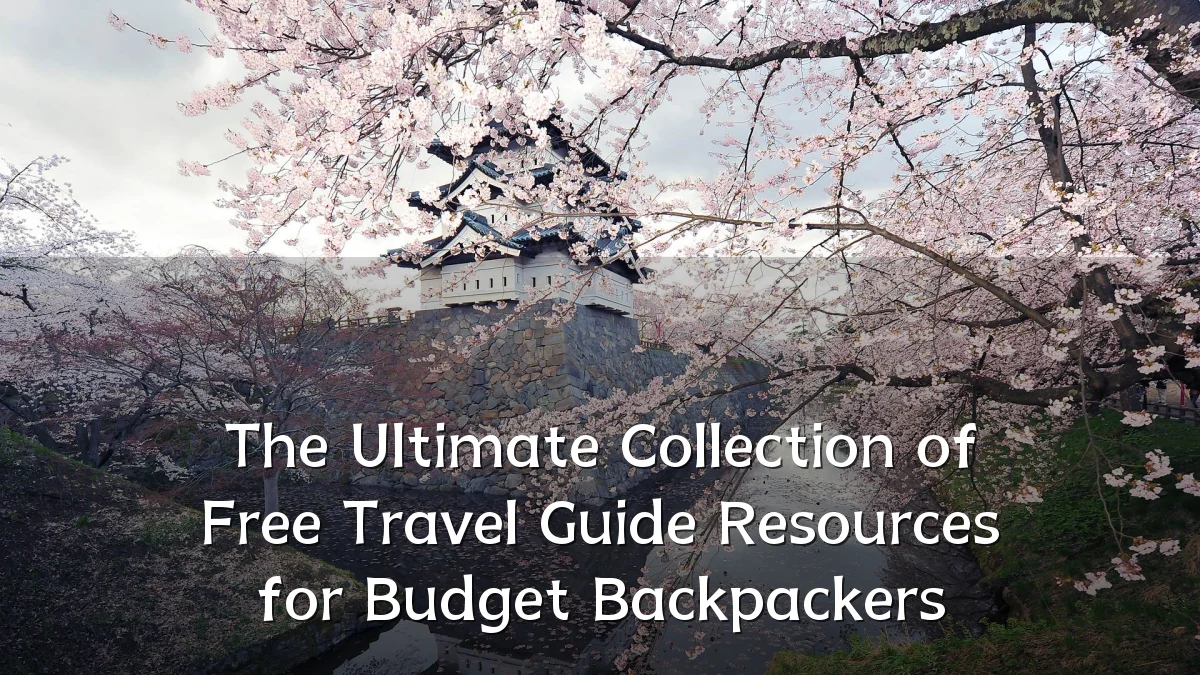
The Ultimate Collection of Free Travel Guide Resources for Budget Backpackers
Recent Trends in Budget Backpacking
Over the past several travel seasons, a clear shift has emerged among long-term and flashpacker-style budget travelers: a growing reliance on free, user-generated and community-vetted resources over traditional paid guidebooks. Social media groups, collaborative wikis, and dedicated apps now dominate the information-gathering phase for planning trips across Southeast Asia, Eastern Europe, and Central America. The trend is driven by both cost sensitivity and a desire for real-time updates on border crossings, accommodation pricing, and safety conditions.

Background: From Print to Peer-to-Peer
The decline of the printed guidebook has been underway for more than a decade, but the pandemic era accelerated the shift. As routes reopened, many backpackers discovered that once-reliable print editions contained outdated visa policies and bus schedules. In response, a decentralized ecosystem of free resources grew rapidly:

- Wiki-style travel platforms: Community-edited sites covering overland routes, budget hostels, and local transport hacks.
- Regional Facebook groups: Active forums where travelers share recent border experiences, price checks, and safety alerts almost instantly.
- Open-source map overlays: Crowdsourced layers for apps like Maps.me and OsmAnd that mark free camping spots, water refill stations, and low-cost eateries.
- Podcast and video archives: Episodic deep dives on specific countries, often with downloadable packing lists and visa checklists.
Key User Concerns
While the abundance of free material is a clear advantage for budget backpackers, several recurring concerns have emerged among the community:
- Accuracy and timeliness: Information in older forum threads or static wiki pages may conflict with recent border policy changes or seasonal road closures.
- Information overload: New travelers often report difficulty filtering credible, relevant advice from anecdotal or outdated posts across multiple platforms.
- Offline access: Many free resources require an internet connection; finding downloadable or printable versions remains a persistent gap for remote routes.
- Bias toward popular trails: Free content tends to concentrate on well-trodden regions, leaving those exploring lesser-visited areas with thinner coverage.
Likely Impact on the Backpacker Community
The growing library of free resources is likely to reshape how budget travelers prepare and adapt on the road in several measurable ways:
- Reduced upfront costs: Relying on free guides can lower pre-trip spending by 20 to 30 percent compared to purchasing multiple print or subscription-based guides.
- Faster on-the-ground adjustments: Travelers using real-time community threads can reroute around price surges, visa bottlenecks, or safety issues within hours rather than days.
- Greater reliance on peer validation: As free content proliferates, the credibility of a resource increasingly depends on recency and cross-referencing between platforms rather than brand reputation.
- Pressure on local information economies: Some independent hostels and tour operators that once provided free paper maps or handouts may need to adapt their marketing as travelers arrive already saturated with digital guides.
What to Watch Next
Several developments could further influence the landscape of free travel resources for budget backpackers in the near term:
- Consolidation of platforms: Watch whether major wiki-style sites or map overlays introduce paid tiers or premium features, potentially narrowing the scope of truly free content.
- Rise of AI-curated itineraries: Free tools that aggregate real-time hostel availability, weather, and transport data into optimized routes may become more prevalent, though accuracy remains an open question.
- Regional fragmentation: Countries with rapidly changing visa or tax regimes (such as digital nomad permits) may see the emergence of localized, subscription-based guides if free communities cannot keep pace.
- Offline-first solutions: Look for more free initiatives offering downloadable wikis, offline map bundles, and print-at-home pocket guides aimed at travelers in areas with intermittent connectivity.